A school board is more than a piece of furniture; in legal terms it is work equipment. As such, it is subject to a regular inspection duty that many school authorities underestimate. In this article we explain what the German DGUV Information 202-021 specifically requires, who is permitted to carry out inspections as a qualified person (befähigte Person) and how we at FASTNET support school authorities nationwide in keeping their board systems in a legally compliant and documented condition.
Why Board Systems Legally Count as Work Equipment
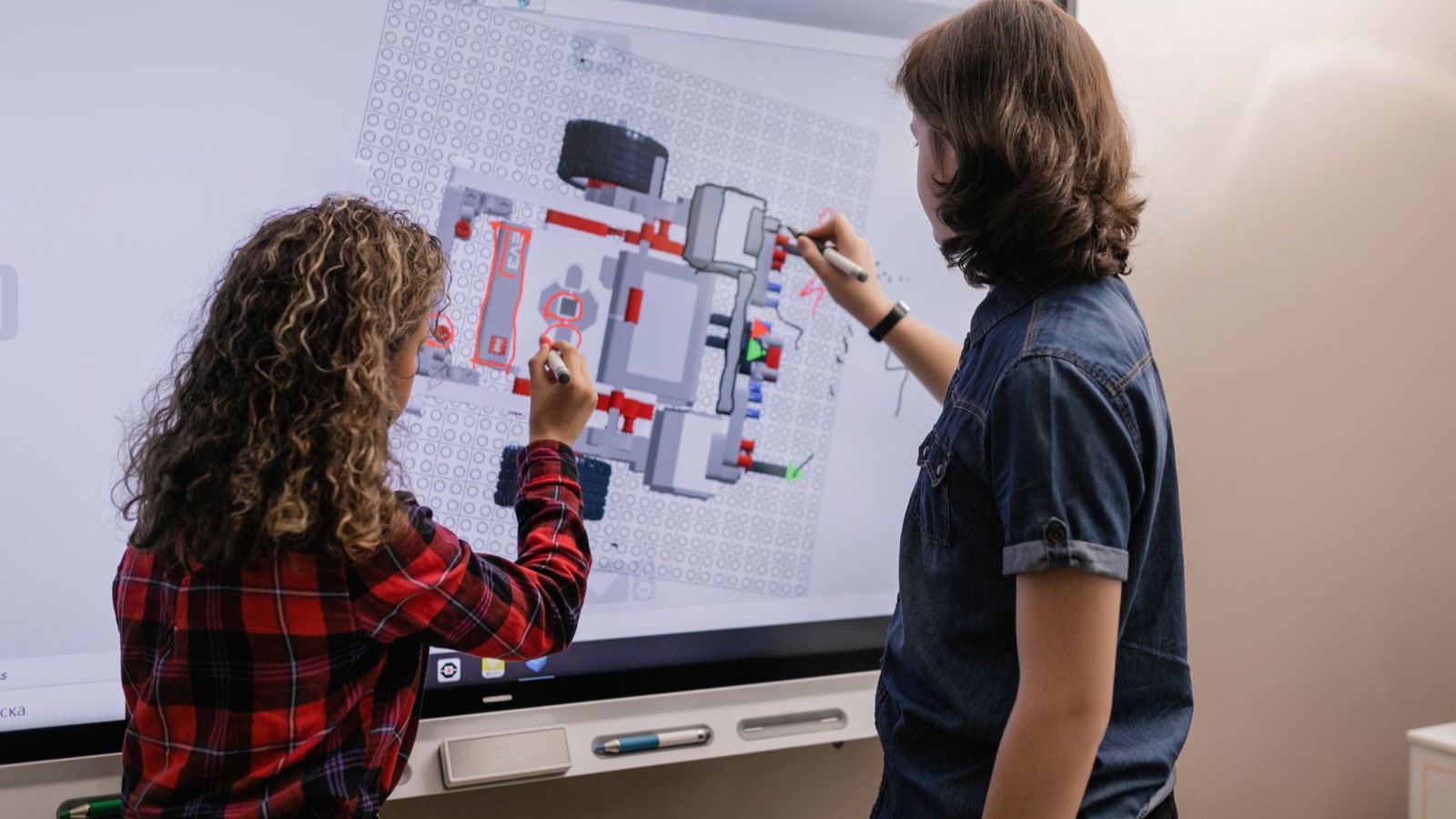
Whether it is a classic chalkboard, a height-adjustable pylon system, a whiteboard or an interactive display, as soon as a board is used in school operations it is work equipment within the meaning of the German Ordinance on Industrial Safety (BetrSichV). Teachers work with it every day, move board panels, adjust the height and use mechanical and increasingly electrical components. This brings the same legal framework into play as for any other technical work equipment in a professional setting.
Responsibility lies with the employer, which in a school context means the school authority (Schulträger). Under § 4 and § 10 BetrSichV, the employer must provide, maintain and service work equipment so that it poses no hazard. § 14 BetrSichV additionally requires regular inspection by a qualified person (befähigte Person). The German DGUV Information 202-021 sets out these general obligations specifically for boards and board systems in schools. Anyone who takes no action here risks not only wear-related damage but, in the event of an incident, also a liability risk for the responsible individuals.
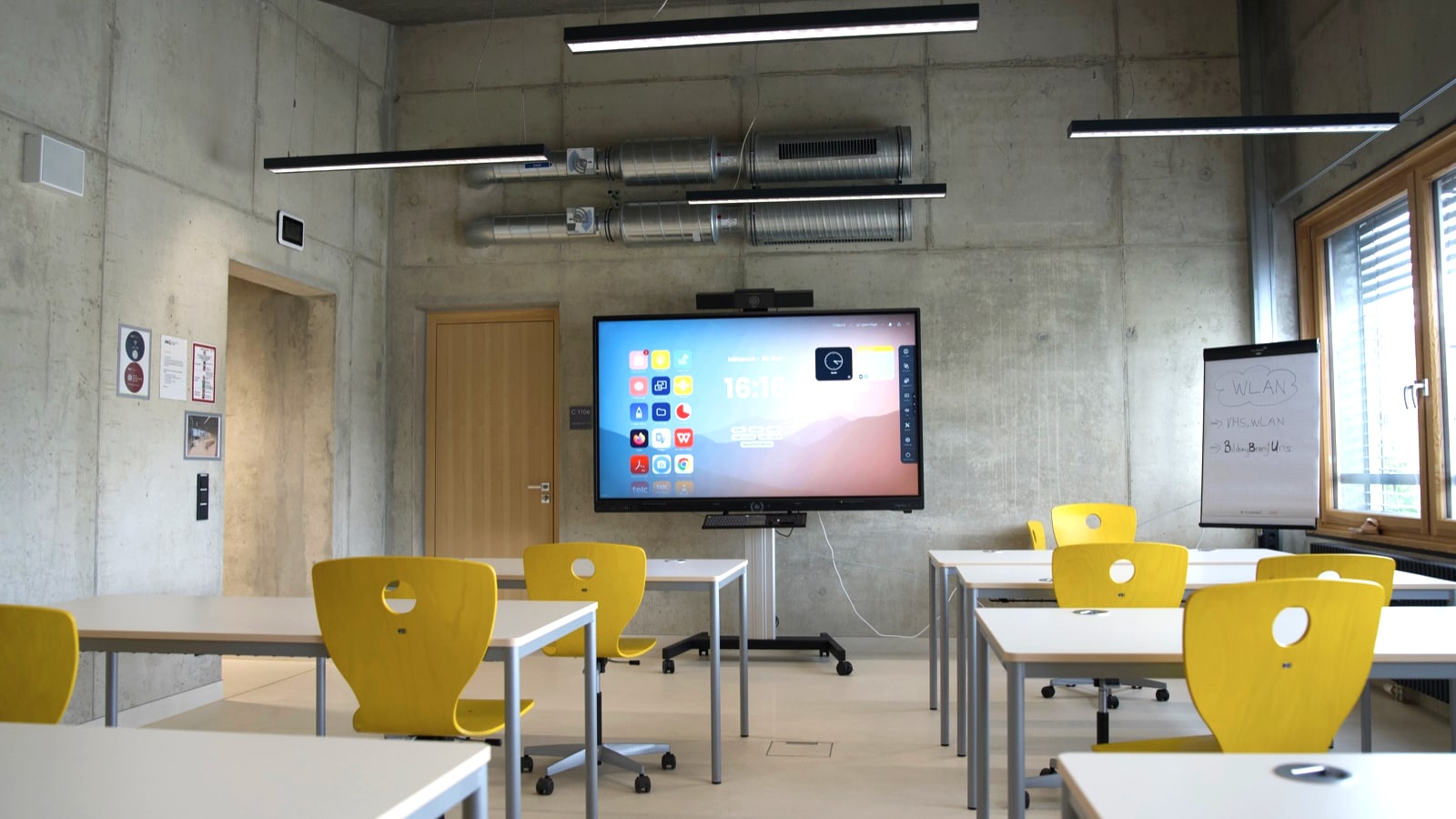
Interactive board systems in particular add complexity: they combine heavy moving mechanics with electrical safety, wall mounting and cabling. It is precisely this combination that makes a competent inspection so important. You can find out more about our work on board and presentation technology under our services.
In the event of an incident, the question of fault arises quickly. If a school authority cannot demonstrate that its board systems were inspected regularly and that identified defects were rectified, it may be accused of breaching its duty to maintain safety (Verkehrssicherungspflicht). A missing or incomplete inspection record therefore effectively shifts the burden of proof to the disadvantage of the authority. An orderly, annually updated inspection history is therefore not merely a formal obligation, but also the most effective protection for the individuals acting on its behalf.
What the German DGUV Information 202-021 Specifically Requires
The German DGUV Information 202-021 is addressed to school authorities and school managements and describes the safe construction, installation and inspection of boards in schools. Its scope covers fixed and mobile boards, folding and sliding boards, pylon systems as well as the increasingly common interactive board systems. At its core, the information requires three things:
- Mandatory inspection at least annually: Board systems must be inspected at regular intervals, as a rule at least once a year, by a qualified person (befähigte Person). The precise interval follows from the risk assessment.
- Visual and functional inspection: This covers, among other things, mountings and anchorings, the mechanics of the moving parts, the height adjustment and gas springs, as well as the electrical safety of electrically operated systems.
- Documentation requirement: Every inspection must be documented in a verifiable way, typically by means of an inspection report and an inspection label (Prüfplakette) on the device, so that the inspection status and traceability can be demonstrated in an audit-proof manner at any time.
Important: The annual inspection does not replace the daily visual check by users, nor the event-based inspection following conversion, repair or relocation. It is the recurring minimum standard with which a school authority demonstrably fulfils its duty of care.
The information also describes requirements for safe construction and installation. These include, among other things, a sufficiently load-bearing fixing to the substrate, secured end positions on height-adjustable systems, protection against unintended lowering, as well as a stable installation of mobile boards. During the inspection we systematically compare the actual condition with these requirements, rather than merely carrying out a superficial functional check.
Who Counts as a 'Qualified Person'?
The concept of the qualified person (befähigte Person) is defined in the German Ordinance on Industrial Safety (BetrSichV) and is not open to free interpretation. A person is qualified if they are competent to carry out the inspection through the interaction of three criteria:
- Specialist knowledge through relevant vocational training in a technical field,
- Professional experience through demonstrable work with the work equipment to be inspected,
- Recent training and up-to-date knowledge of the relevant regulations, standards and technical rules.
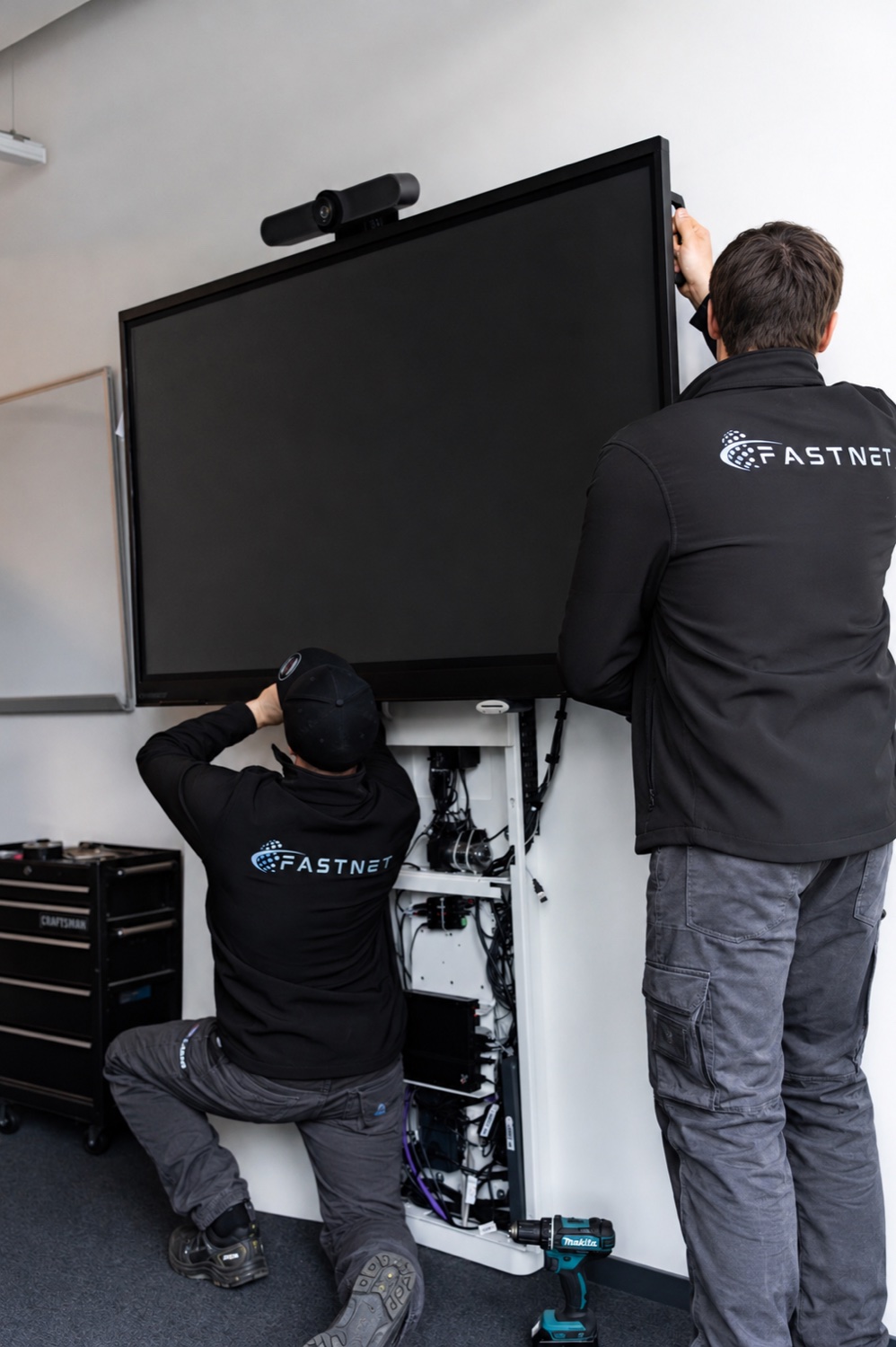
A teacher or a caretaker generally does not meet these requirements for the annual inspection. At FASTNET we have suitably qualified and trained technicians who carry out DGUV-compliant inspections of board systems. Because we install and maintain board, presentation and conference technology every day, our teams bring the required combination of specialist knowledge, experience and current training, nationwide and at every location.
Typical Defects in Board Systems in Everyday School Life
Board systems are used intensively over many years. From our inspections we are familiar with the weak points that recur in everyday school life and can pose a real safety risk:
- Loose mountings: Wall anchorings and screw connections that have come loose through vibration and continuous load.
- Worn gas springs: Height-adjustable boards whose gas pressure springs have lost force, so that the board sags or shoots up abruptly.
- Defective height adjustments: Jamming or worn guides that prevent safe adjustment.
- Damaged cables: Crushing, broken insulation or loose plug connections on electrically operated and interactive systems.
- Inadequate cable routing: Exposed cables that become a trip hazard or are mechanically stressed by board movement.
An example from our practice: at a school authority in North Rhine-Westphalia with 24 locations, during an initial comprehensive inspection we identified worn gas springs and loosened mountings on a notable proportion of the pylon systems, defects that are barely noticeable in ongoing operation but that can lead to injuries in an emergency. We documented and prioritised all complaints and subsequently rectified them on schedule.
Many of these defects develop gradually. A gas spring continuously loses pressure over the years without anyone noticing in everyday use, until one day the board visibly sags. This is precisely where the value of a recurring, systematic inspection lies: it detects wear before it becomes an acute risk and enables proactive maintenance instead of expensive emergency repairs during ongoing lessons.
How a DGUV Board Inspection with FASTNET Works
We have set up the inspection process so that it remains plannable and traceable even across many locations. A DGUV board inspection with FASTNET is divided into four steps:
- Enquiry and site survey: You describe your inventory and locations to us, and we gain an overview of the number, types and condition of the board systems.
- Quotation and project plan: You receive a transparent quotation with a concrete schedule and route plan that takes ongoing school operations into account.
- On-site inspection: Our qualified technicians carry out the visual and functional inspection, nationwide and with complete photo documentation of every complaint.
- Report and handover: You receive a complete inspection report for each board as well as a signed handover protocol confirming proper completion.
Because we not only inspect but also install and maintain, we can rectify identified defects directly on request, without you having to commission a second service provider. This saves coordination effort and shortens the time during which a defective system remains in use.
For school authorities with many locations, we plan the inspections as a single coherent project. We bundle appointments by region and school, align them with term and holiday times and work through them location by location according to a fixed route plan. This keeps the effort for your schools low, and in the end you receive uniform, comparable documentation covering the entire inventory instead of many inconsistent individual records. As a systems integrator, we cover consulting, inspection, maintenance and repair from a single source.
Documentation, Inspection Label and Tracking
Every inspected board system receives an inspection label (Prüfplakette) from us showing the inspection date, so that the next inspection date is recognisable at a glance. In parallel, we record the results for each device in a structured inspection report, including photo documentation and a defect assessment. This creates a continuous history that you can track even across several inspection cycles.
For you as a school authority, this means two things above all: legal certainty, because you can demonstrably fulfil your inspection and documentation obligations at any time, and audit readiness, because you can present a complete record to supervisory authorities, accident insurers or in the event of an incident.
Checklist for School Authorities: How to Stay DGUV-Compliant
With this checklist you keep track of your obligations regarding the inspection of board systems:
- Complete inventory of all board systems per location created and kept up to date
- Risk assessment for the board systems documented and inspection intervals defined
- At least annual inspection by a qualified person ensured
- Event-based inspection after conversion, repair or relocation planned in
- Inspection reports for each device filed completely and in an audit-proof manner
- Inspection labels attached to the device and the next inspection date recognisable
- Identified defects prioritised, documented and rectified on schedule
- Responsibilities between school and school authority clearly defined
The Key Points at a Glance
Boards and interactive board systems are work equipment and, under the German Ordinance on Industrial Safety (BetrSichV) and DGUV Information 202-021, must be inspected at least annually by a qualified person (befähigte Person) and documented in a verifiable way. The school authority is responsible. At FASTNET we handle inspection, documentation and, on request, defect rectification nationwide from a single source.
Frequently Asked Questions About the DGUV Inspection of Board Systems
About the author

Kim Fabig
Managing Director | Technical Lead
FASTNET GmbH